













·       Applications:

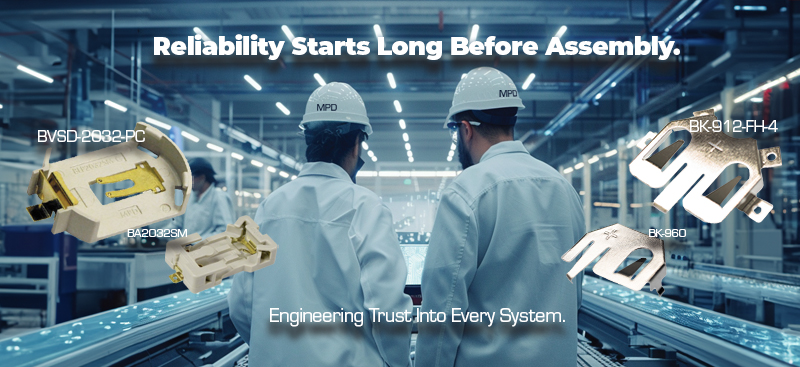
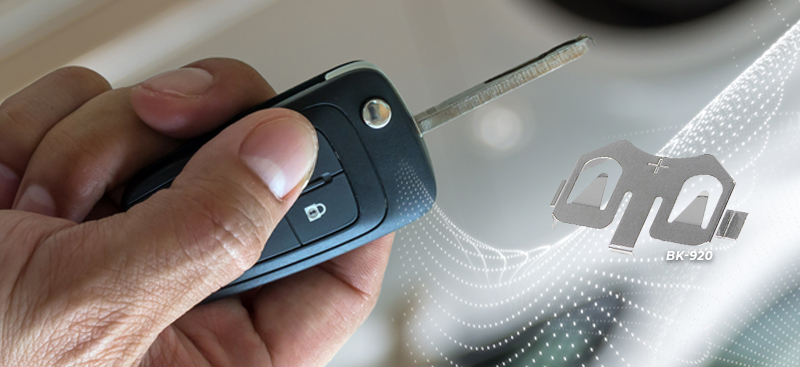
Wide usage in memory back up systems like cmos, microprocessors, electronic communications devices, telecommunications equipment, Industrial controls, real time clocks, consumer products, pos displays, alarm systems and main boards. 

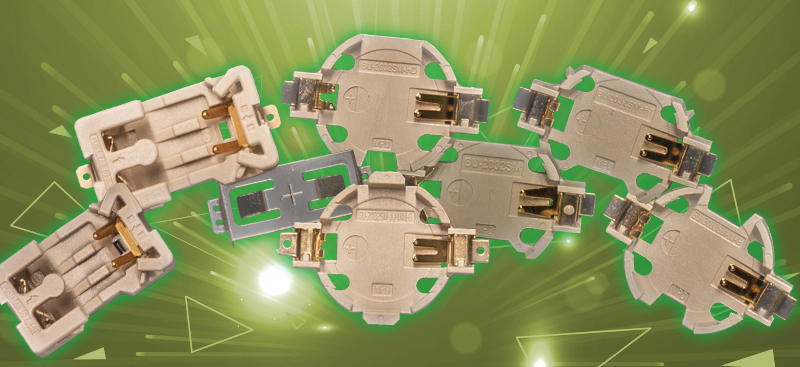
·       Coin Cell Series

Features:

  • Easy battery changes without any tools or soldering
  • Light weight
  • 30 years of worldwide sales in many diverse applications with documented performance
  • Lead free wave solderable and reflow versions.
  • Portable products version with High Grip
  • Versions with high shock & vibration tolerance
  • Exceeds requirements of ANSI/EIA-540J0000   

Contacts:

Lithium batteries are nickel plated and MPD offers gold or nickel plated battery sockets. 

Bright Gold plating over base metal (Resistance 30 M Ω maximum)

  • Superior in outdoor or humid applications
  • Excellent in backup applications or low current applications
  • Industry standard pc pin or surface mount pad spacing 
  • Outstanding resistance to tarnish or corrosion

Bright Nickel plating over base metal (Resistance 50 M Ω maximum)

  • Contact retention exceeding ANSI/EIA-540J0000

Plastic:

Features: PBT/Nylon

  • Chemical and solvent resistant plastics.
  • Broad service temperature range with excellent thermal cycling performance.
  • Excellent toughness and strength
  • Dielectric strength 560 volts/mil at 25°c for 5 sec.
  • Insulator resistance: 5000 M Ω minimum

Features: LCP

  • Exceptional dielectric strength at high temperatures
  • Better chemical resistance than polyesters
  • Lead free reflow process compatible, over 300°c  
  • Pick and place compatible
  • Version for portable products with higher battery retention force


World Gold Council - applications - electronic

“The beneficial material properties of gold include outstanding resistance to corrosion, the ease with which it can be worked and high thermal and electrical conductivity. Only silver and copper are better conductors of electricity, but do not have comparable resistance to tarnishing or corrosion. In conditions under which most other metals either tarnish or corrode away, gold remains inert and extremely durable. So where resistance to tarnish or corrosion is essential, it is therefore common to either use gold or a gold alloy, or to plate gold onto a less noble metal. For electronic applications, the resistance of gold to environmental effects is perhaps its most important property. It means that the technical performance of gold bonding wires or gold electroplating remain essentially unaltered with time“